Numbers & operations
Build confidence with numbers, factors and fractions.

Mathematics, one idea at a time
Go beyond remembering a formula. See why it works, follow a clear example and build the confidence to solve the next problem yourself.

Clear ideas · Worked examples · Practice
Choose your board and class before you explore. No mixed-up chapters from different stages.
Build confidence with numbers, factors and fractions.
Understand angles, space and the measurements that describe them.
Look for relationships and explain the logic behind a solution.
9 concepts mapped for this path.
Aligned to the CBSE / NCERT scheme of study · 2025–26 academic cycle · Mapping reviewed 2026-08-29. This is a concept-map preview; full lessons and saved progress require an account.
Start Class 5 mathsA small preview of how an abstract idea becomes something you can see and use.
Split one whole into four equal parts. Take three of them. That is 3/4.

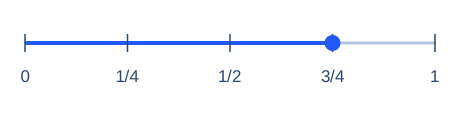
Each mark is one quarter of the distance from 0 to 1. Three equal steps land at 3/4.
Try it yourself
Divide 20 into four equal groups, then take three groups.
Choose an answer to see each step.
A worked example explains each step—not just the final number.
Try the sample lessonA clear learning loop for the moments when maths feels difficult.
Start with plain-language explanations and meaningful examples.
Apply the idea and work through the reasoning behind each step.
Revisit what needs attention and connect it to the next concept.
Choose a maths concept and take the next step at your own pace.