
Look beyond the surface
Use particle ideas to explain a property you can observe.

Explore. Connect. Discover.
Why does ice melt while iron rusts? How do tiny particles explain materials we can see? Connect observations with atoms, reactions and everyday examples—one clear idea at a time.
Explore the ideas first. Choose a class only when you need one.

Small particles. A world of possibilities.
More than a school subject
Build understanding you can use—inside a lesson and in the world around you.
Use particle ideas to explain a property you can observe.

Move between a description, model and equation without losing the meaning.

Distinguish an observation from the evidence needed to identify a chemical reaction.
Ask how chemistry helps explain food, cleaning products and materials around you.
Explore and learn
Open an area for a clear starting point, a useful question and an everyday connection.
These are broad subject areas, not official chapters for a particular board or class.
 1. Matter and statesConnect visible properties with a particle-level explanation.
Make it realIce melts into liquid water. Its state changes, but it is still water.
 2. Atoms, elements and bondingExplore the building blocks that help explain the properties of substances.
Make it realA compound has elements chemically combined; a mixture does not become a compound simply because its ingredients are together.
 3. Chemical reactionsDescribe chemical change with observations, explanations and equations.
Make it realAn equation is not just a string of symbols. Check what each substance represents and why the atom counts must balance.
 4. Acids, bases and saltsBuild a careful understanding of properties, indicators and neutralisation.
Make it realAn indicator provides evidence about a solution. It is not permission to touch, taste or combine it.
 5. Solutions and everyday chemistryConnect dissolved substances, concentration and material choices with daily life.
Make it realSugar may no longer be visible after it dissolves, but the dissolved sugar is still present in the solution.
Need the chapters for a particular curriculum?
State or substance?
Which description explains this change?
A quick preview—not a graded test. Choose an answer and see the reasoning.A clearer way to learn
Start with what you can notice and a question about the change.
Use a model and clear example to connect particles with properties.
Work through the reasoning behind a description or equation.
Try a related question and check that the explanation still works.
About this subject
Chemistry connects the world we can observe with the particles and interactions that help explain it. It gives meaning to materials, properties and changes rather than treating reactions as facts to memorise.
EveryAgeLearn brings an observation, a clear explanation and a worked example together before you practise. That helps you connect symbols with substances, distinguish a physical change from a chemical one, and explain why a method works—not just remember the final answer.
Your learning journey
Only actual mapped boards, classes and stages appear here. A broad subject introduction is not a combined syllabus.
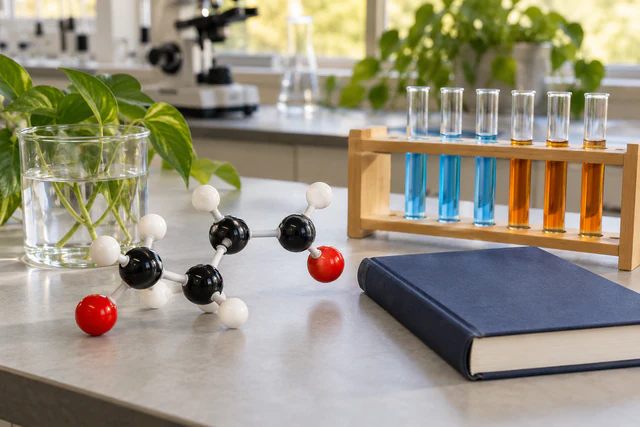
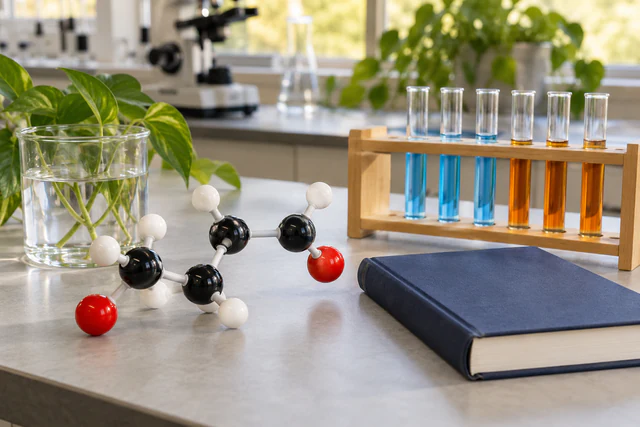
Laboratory photographs are illustrative, not practical instructions. Any real laboratory work needs suitable supervision, equipment and safety procedures.
Mapping: Reference: CISCE scheme of study · Curriculum reference · selected coverage · Reviewed 2026-08-29. Explanations and practice support learning; this is not a reproduction of an official syllabus.
Start with one question about matter and follow the explanation.