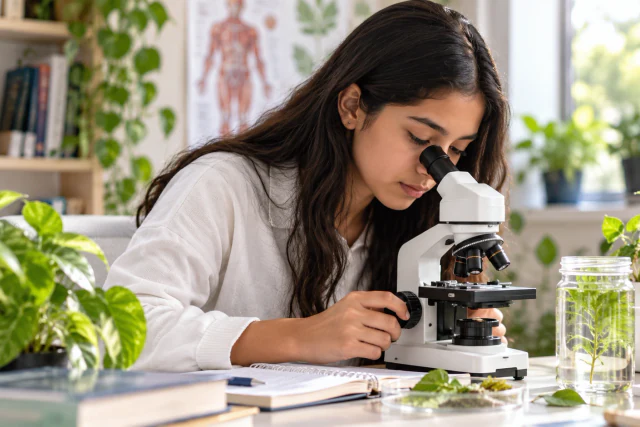
See structure and function
Ask how a feature helps a cell, organ or organism do its job.

Explore. Discover. Connect.
How do cells work together? What connects a leaf, a body and an ecosystem? Explore living systems through clear explanations and connected examples—and see the relationships behind the facts.
Explore the ideas first. Choose a class only when you need one.
From a tiny cell to a connected world.
More than a school subject
Build understanding you can use—inside a lesson and in the world around you.
Ask how a feature helps a cell, organ or organism do its job.
Move from cells to tissues, organisms and ecosystems without losing the relationships.

Use observations and models to explain a process rather than only name its parts.

Connect classroom ideas with plants, habitats and the diversity around you.
Explore and learn
Open an area for a clear starting point, a useful question and an everyday connection.
These are broad subject areas, not official chapters for a particular board or class.
 1. Cells and tissuesConnect cell structures with functions and the organisation of living things.
Make it realA diagram labels a cell part. Take the next step: explain how that part contributes to what the cell does.
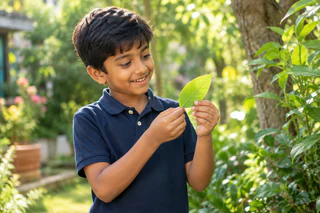 2. Plants and life processesFollow the processes that support plant growth and survival.
Make it realA leaf is more than a shape to label. Ask what enters, what leaves and which processes happen there.
 3. Human body systemsSee how organs and processes work together rather than as separate lists.
Make it realWhen you discuss respiration and circulation, ask how the two processes support one another.
 4. Heredity and variationExplore how inherited information and variation help explain living things.
Make it realA simple inheritance diagram can help explain a model. Ask which assumptions make it useful and which real cases are more complex.
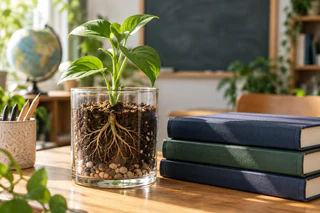 5. Ecology and ecosystemsFollow relationships between organisms, resources and environments.
Make it realIf one organism becomes less common, a food web helps you ask which other relationships might be affected.
Need the chapters for a particular curriculum?
Connect the levels
Which sequence describes increasing levels of organisation in the human body?
A quick preview—not a graded test. Choose an answer and see the reasoning.A clearer way to learn
Begin with a living system and a question about how it works.
Use a clear explanation and example to explore structure and function.
Connect the parts and describe the process in your own words.
Try a related question and place the idea in a bigger system.
About this subject
Biology explores life at different scales: cells, organisms and the ecosystems they form. The most useful understanding comes from seeing how structures, processes and relationships fit together.
EveryAgeLearn makes those connections easier to follow with approachable explanations, examples and practice. Move beyond labelling a part to explaining its role, tracing a process and seeing how a change in one part can affect the wider living system.
Your learning journey
Only actual mapped boards, classes and stages appear here. A broad subject introduction is not a combined syllabus.
The IBDP Biology pathway currently contains Cell Biology within one combined IBDP (SL & HL) stage. It is not separate SL and HL coverage or a complete syllabus.
Mapping: Aligned to the IBDP subject-group structure · Current programme · Reviewed 2026-08-29. Explanations and practice support learning; this is not a reproduction of an official syllabus.
Begin with one connection and build a clearer picture of life.